
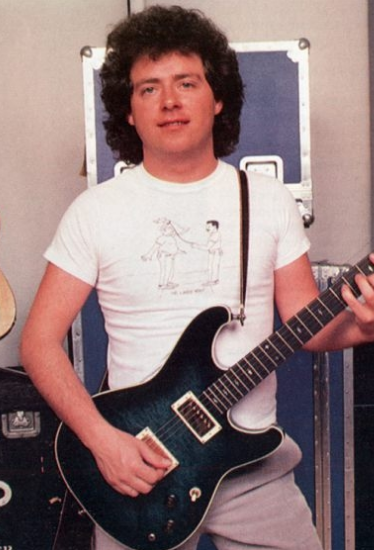
SCROLL DOWN FOR THE FULL SONG
There are songs that remind us of a person. Others bring back memories of a summer, a long drive, or a particular moment in life.
And then there are songs that seem to transport us somewhere completely different.
In 1982, a group of musicians released a recording with a sound unlike anything else on the radio.
It had a hypnotic rhythm, beautiful harmonies, an unforgettable chorus, and lyrics that painted pictures of a distant place.
The song was called “Africa,” and it would eventually become one of the most recognizable recordings of the entire decade.
But the story behind it is even more interesting than many people realize.

An Idea Inspired by a Distant Continent
By the early 1980s, the American rock band Toto had already established itself as one of the most talented groups in popular music.
The musicians were highly skilled performers who had worked with some of the biggest names in the recording industry.
Their music combined rock, pop, jazz, and elements of soul, creating a distinctive sound that was difficult to categorize.
But one of the band’s songwriters, David Paich, had an idea that would lead to something extraordinary.
He was fascinated by Africa.
He had seen documentaries about the continent, including programs showing the human suffering and poverty affecting parts of the region.
Those images stayed with him.
He began imagining what it would be like to be someone who travelled to Africa and experienced its landscapes, people, and culture firsthand.
Interestingly, the song was not based on a personal journey across the continent.
It was largely an imaginative creation, built from his interest in the subject and the emotions he associated with it.
That idea eventually became the foundation of one of the greatest pop songs of the 1980s.
Creating a Sound That Felt Like a Journey
The music itself was just as important as the lyrics.
David Paich and drummer Jeff Porcaro helped create a recording filled with unusual rhythmic patterns and layered instrumentation.
The percussion was especially distinctive.
Instead of relying entirely on a conventional rock arrangement, the song incorporated a variety of percussion sounds that gave it a rolling, almost hypnotic feeling.
The keyboards created a dreamy atmosphere, while the guitars and bass provided a strong foundation.
Everything was carefully arranged.
One of the most memorable elements was the song’s chorus, which seemed to open up into something much bigger than the verses.
It was powerful without being aggressive.
It was emotional without becoming overly dramatic.
And it had a melody that seemed to stay in your head long after the recording ended.
A Chorus That Became Impossible to Forget
One of the reasons “Africa” became so popular was its unforgettable chorus.
The vocals were performed by David Paich and Bobby Kimball, whose voices blended beautifully.
Their harmonies gave the recording a warm, almost magical quality.
There was something about the way the chorus arrived after the verses that made it especially satisfying.
The song built anticipation, and then everything came together.
It was the kind of melody that people could recognize after hearing only a few seconds.
Even listeners who didn’t know the band’s name could often identify the recording immediately.
That is a rare achievement.
And it helped turn the song into one of the defining musical moments of 1982.
From a New Album to a Number One Hit
“Africa” appeared on Toto’s fourth studio album, Toto IV, released in 1982.
The album was already filled with strong material, including another major hit, “Rosanna.”
But “Africa” would eventually become the song most closely associated with the group.
Released as a single in 1982, it steadily gained attention on radio stations.
Listeners connected with its unusual sound and memorable melody.
In February 1983, it reached number one on the Billboard Hot 100 in the United States.
It became the band’s first and only number-one single on that chart.
The success was enormous.
The album Toto IV also achieved major commercial success and earned the group several Grammy Awards at the 1983 ceremony, including Album of the Year.
For the musicians, it was an extraordinary period.
Years of experience in the studio had come together to create something that would last far longer than anyone could have expected.
The Secret Behind Its Unusual Rhythm
One of the most interesting parts of the recording is the percussion.
Jeff Porcaro was known for his exceptional drumming ability, and his work on “Africa” helped give the song its unmistakable identity.
The rhythm has a flowing quality that makes the entire recording feel as though it is constantly moving forward.
There are layers of percussion that create a sense of movement without overwhelming the melody.
The result is unusual but incredibly accessible.
You don’t need to understand music theory to appreciate it.
You simply hear the rhythm and feel that something special is happening.
It is one of those recordings where every instrument seems to have a purpose.
Nothing feels accidental.
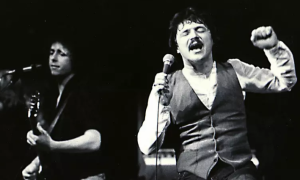
A Song That Refused to Disappear
As the years passed, many songs from the early 1980s slowly faded from regular radio rotation.
But “Africa” was different.
It continued to appear on radio stations, in films, on television, and eventually across the internet.
New generations discovered it, while those who remembered the original release continued returning to it.
Its popularity even experienced another major wave decades later, as younger listeners embraced the song and turned it into an unexpected cultural phenomenon.
The recording became a favorite at parties, sporting events, and celebrations.
People who had never been alive when it was released began singing along to a song that was already more than thirty years old.
That is the kind of longevity very few recordings achieve.
More Than Forty Years of Memories
For people who remember 1982, hearing this song can bring back an entire period of life.
Maybe it reminds you of driving with friends, listening to the radio on a summer evening, or hearing it playing in a familiar place.
Maybe you remember the first time you bought the album or heard the chorus coming through the speakers at home.
And for younger listeners, it has become one of those rare classics that feels just as exciting today as it did when it first appeared.
There is something remarkable about that.
Music changes. Technology changes. Entire generations grow up with completely different sounds.
Yet some melodies remain untouched by time.
Some Songs Become Part of History
More than four decades have passed since Toto introduced the world to “Africa.”
Its combination of rhythm, melody, harmonies, and imagination created something truly unforgettable.
It was a song inspired by a distant place, written by musicians who transformed an idea into a worldwide hit.
And somehow, it became a soundtrack to millions of personal memories.
Perhaps that is the real magic of music.
A songwriter can begin with an idea, a melody, or an image in his imagination.
But once the song reaches the world, it belongs to everyone who hears it.
And every listener finds something different within it.
Some songs take us back to a moment in our lives. Others take us somewhere we’ve never been.