
SCROLL DOWN FOR THE FULL SONG
There are songs that remind us of the people we love.
And then there are songs that remind us of the people we cannot imagine living without.
In 1971, a powerful ballad reached listeners with a message that was almost impossible to ignore. It was about heartbreak, loneliness, and the feeling that life could never be the same after losing someone important.
The performance was emotional. The melody was unforgettable. And the voice behind it seemed to carry every ounce of pain in the lyrics.
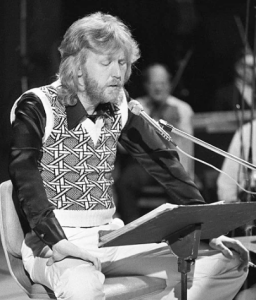
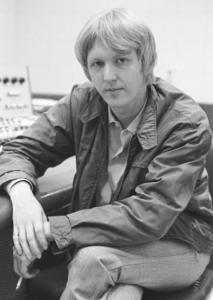
The song was “Without You,” recorded by Harry Nilsson.
But the story of this timeless ballad began before Nilsson ever stepped into the studio.
The Song That Started With Two Songwriters
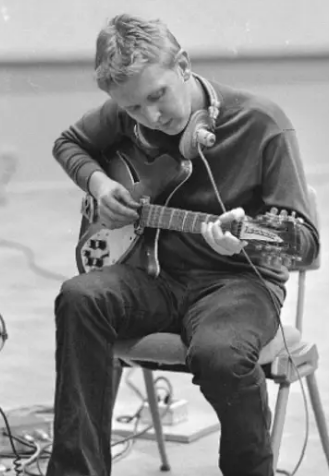
The original version of “Without You” was written by Pete Ham and Tom Evans, members of the Welsh rock band Badfinger.
The group had been building its reputation in the late 1960s and early 1970s, releasing melodic rock songs that attracted attention from both critics and listeners.
In 1970, Badfinger recorded “Without You” for its album No Dice.
The original recording had a more understated sound than the version that would later become famous.
But the emotion was already there.
The lyrics described a person struggling with the thought of losing someone they loved. The idea was simple, but powerful: what would life mean if the person who mattered most was no longer there?
It was a feeling that listeners could understand.
And eventually, another musician would hear the song and recognize just how much potential it held.
Harry Nilsson Hears Something Special
Harry Nilsson was already known as a talented singer-songwriter with a distinctive voice.
He had built a reputation for writing clever, thoughtful songs, but he was also an extraordinary interpreter of other people’s music.
When he heard Badfinger’s “Without You,” he was deeply moved by it.
Nilsson decided to record his own version for his 1971 album Nilsson Schmilsson.
His approach transformed the song.
Instead of keeping the arrangement relatively restrained, Nilsson built the recording into a dramatic ballad.
The piano created a gentle foundation. The arrangement gradually grew in intensity. And Nilsson’s voice became the emotional center of the entire performance.
He began softly, almost as though he were trying to hold back his feelings.
But as the song progressed, his voice grew more powerful.
By the time the recording reached its emotional peak, it sounded as though the singer was pouring everything he had into the performance.
That contrast between the quiet opening and the powerful climax became one of the recording’s defining features.
A Voice That Made the Heartbreak Feel Real
One of the reasons Harry Nilsson’s version remains so memorable is the way he performed it.
He didn’t simply sing the words.
He made the emotion feel immediate.
The recording captures the feeling of someone trying to understand what life would be like without the person they love.
For some listeners, that feeling might bring back the end of a relationship.
For others, it might remind them of someone they lost, or a moment in life when everything seemed to change.
The song doesn’t offer an easy answer.
It simply expresses the pain.
And sometimes, that is exactly what people need from music.
A song that understands what they are feeling, even when they cannot find the words themselves.
The Recording That Reached Number One
When Harry Nilsson released his version in 1971, it quickly attracted attention.
The recording became a major success in the United States and the United Kingdom.
In the United States, it reached number one on the Billboard Hot 100 in February 1972.
It also became a number-one hit in the United Kingdom.
For Nilsson, it was one of the defining achievements of his career.
The song introduced his voice to an even wider audience and became one of the recordings most closely associated with his name.
It also helped establish Nilsson Schmilsson as one of his most successful albums.
But the song’s success did not erase the original version.
Instead, it gave the composition a second life.
Listeners who discovered Nilsson’s recording would eventually learn that the song had first been written and recorded by Badfinger.
And the story behind it became just as fascinating as the music itself.
A Song That Became Bigger Than Its Original Recording
“Without You” is an example of how a great song can take on a new meaning through another artist’s interpretation.
Badfinger’s original recording had its own emotional character.
Harry Nilsson’s version brought a different kind of intensity.
Neither approach takes away from the other.
They simply reveal different sides of the same composition.
Over the years, many artists have recorded their own versions of “Without You,” including Mariah Carey, whose 1994 recording introduced the song to another generation.
But Nilsson’s version remains especially beloved for its raw emotion and unforgettable vocal performance.
It became the version that many listeners immediately think of when they hear the song’s title.
Why We Still Remember It
The early 1970s gave us many unforgettable ballads.
But few captured heartbreak quite like this one.
There is something timeless about the feeling at its center.
Most people have experienced a moment when someone important was suddenly no longer part of their everyday life.
Sometimes the separation is temporary.
Sometimes it is permanent.
And sometimes, even years later, a familiar song can bring those memories back in an instant.
That is the power of “Without You.”
It reminds us of the people who mattered, the moments we shared, and the way life can feel different after someone leaves.
For those who remember hearing it on the radio in the early 1970s, the song may bring back memories of a particular person or chapter of life.
For younger listeners, it may simply sound like one of the most powerful love songs ever recorded.
Either way, the emotion remains.
Some Songs Stay With Us Forever
More than five decades have passed since Harry Nilsson recorded his unforgettable version of “Without You.”
Yet the song still has the ability to stop people in their tracks.
Its message is simple. Its melody is timeless. And its emotional power has never really faded.
Perhaps that is because the song reminds us of something we all understand.
The people we love are not just part of our lives.
They become part of who we are.
And when they are gone, whether through distance, heartbreak, or time, we carry those memories with us.
Sometimes, all it takes is one familiar melody to bring them back.
Some songs don’t just remind us of love. They remind us how deeply we can feel its absence.