
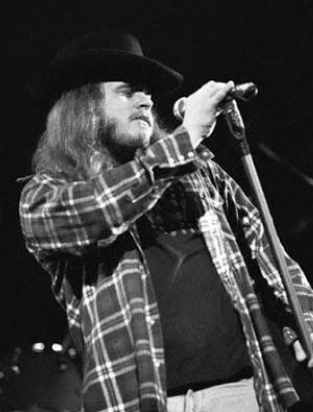
SCROLL DOWN FOR THE FULL SONG
Some songs make you remember a person. Others make you remember a place, a time in your life, or the feeling of being young enough to believe the entire world was waiting for you.
And then there are songs that make you want to roll down the windows, turn up the radio, and drive until the road disappears into the distance.
In 1973, a Southern rock band released a song that captured that feeling like few others ever have.
It began with a quiet piano, a gentle guitar, and a question that sounded almost like a final goodbye. The singer seemed to be speaking to someone he loved, knowing that staying together might not be possible.
But as the song continued, something extraordinary happened.
The music grew louder. The guitars began to soar. And what started as a tender, reflective ballad transformed into an electrifying rock performance that seemed to break free of every limitation.
The song was called “Free Bird,” and the band was Lynyrd Skynyrd.
More than fifty years later, its closing guitar solo remains one of the most recognizable moments in classic rock. But the song’s story began long before it became a concert favorite, and its meaning reaches beyond the idea of simply wanting to be free.
A Southern Band With Something to Prove
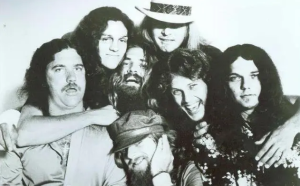
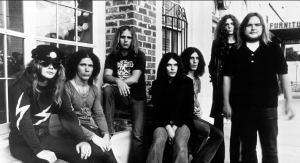
In the late 1960s and early 1970s, a group of young musicians from Jacksonville, Florida, were working to establish themselves in the American rock scene.
The band that eventually became Lynyrd Skynyrd featured vocalist Ronnie Van Zant, guitarists Gary Rossington and Allen Collins, bassist Leon Wilkeson, keyboardist Billy Powell, drummer Bob Burns, and guitarist Ed King during the period surrounding the band’s early breakthrough.
They were developing a sound that blended blues, country influences, and hard-driving rock.
Their music had a distinctly Southern character, but it wasn’t limited to one region or audience. The band could deliver a heartfelt ballad one moment and a powerful guitar-driven performance the next.
Ronnie Van Zant was a direct, expressive singer whose voice carried a natural sense of authority. Allen Collins and Gary Rossington brought different strengths to the guitar work, creating a sound that would become central to the band’s identity.
They were not yet the legendary group that generations of fans would remember.
They were musicians working to make their mark, playing shows, developing songs, and trying to build something that could last.
Among the songs taking shape was one that would eventually become their signature recording.
The Guitar Idea That Became a Classic
“Free Bird” was written by Allen Collins and Ronnie Van Zant.
The story of its creation began with Collins and a guitar progression that he had been developing. He had the musical idea, but it needed something more: lyrics that could give the music an emotional direction.
Van Zant helped provide that missing piece.
The opening question became the foundation of the song. It sounded like someone wondering whether they would still be remembered after leaving a relationship behind.
That question was simple, but it carried a great deal of emotion.
What happens when two people care about each other, but one of them cannot promise to stay? What happens when affection is real, yet the desire for independence is just as strong?
The song doesn’t offer a neat answer.
Instead, it presents the conflict between attachment and freedom, allowing the listener to decide what the words mean in the context of their own life.
For some people, the song sounds like a farewell to a romantic partner. For others, it is about the desire to follow an uncertain path without being held back.
That openness is part of its lasting appeal.
The song feels personal without telling listeners exactly what they must feel.
A Ballad Before the Storm
One of the most remarkable things about “Free Bird” is how patiently it begins.
The original recording opens with a gentle keyboard passage, played by Billy Powell, before the other instruments gradually establish the atmosphere.
The early section is spacious and reflective. The arrangement gives Van Zant’s voice room to carry the lyrics, and the guitar work adds feeling without overwhelming the song.
It sounds almost like a conversation between two people who understand that something important is coming to an end.
There is sadness in the performance, but there is also acceptance.
The speaker is not necessarily saying that the relationship meant nothing. Quite the opposite. The emotional weight comes from the recognition that caring about someone does not always mean being able to give them the future they want.
That is a complicated feeling, and the song allows it to remain complicated.
The early verses move at a measured pace, giving listeners time to absorb the words. Nothing feels rushed.
Then the arrangement begins to build.
The guitars grow more prominent, the rhythm becomes more forceful, and the song gradually moves toward its legendary instrumental ending.
The transformation is so effective because the music has earned it.
After spending several minutes in a reflective atmosphere, the listener is suddenly carried into something much bigger.
The goodbye becomes a release.
The Guitar Solo That Changed Everything
Ask classic rock fans about “Free Bird,” and many will immediately think of its extraordinary guitar solo.
It has become one of the defining instrumental passages in rock history, a performance that can turn an already powerful song into an unforgettable live experience.
The extended closing section features the band’s guitarists driving the music forward with increasingly intense playing.
The sound is fast, forceful, and full of momentum. The guitars seem to chase one another, building energy until the music feels almost unstoppable.
But the solo is not simply a display of technical skill.
It works because of everything that comes before it.
The song begins with uncertainty and emotional restraint. By the time the guitar section arrives, that restraint has been released. The instruments express what the lyrics can no longer contain.
The music seems to take flight.
That is why the solo feels so closely connected to the song’s title. The performance creates a sense of movement and escape, as though the music itself has finally broken free.
It is one of those rare moments when the arrangement becomes part of the storytelling.
You don’t need to understand guitar technique to feel what is happening. You can simply listen as the song gathers speed and intensity, carrying you somewhere the opening never seemed to promise.
And once that solo begins, it is difficult to imagine the song ending any other way.
The Year Was 1973
Lynyrd Skynyrd released “Free Bird” on its debut album, Pronounced ‘Lĕh-‘nérd ‘Skin-‘nérd, in 1973.
The album helped introduce the band to a wider audience and established the musical style that would become its trademark.
Alongside “Free Bird,” it included “Gimme Three Steps” and “Simple Man,” another song that would eventually become a classic.
At first, “Free Bird” was not the enormous radio hit that its reputation might suggest today. The song was long, and its extended instrumental section made it an unusual choice for conventional radio programming.
A shorter version was eventually released as a single in 1974. It climbed the American charts, reaching No. 19 on the Billboard Hot 100 in 1975.
But the song’s cultural importance would extend far beyond its chart position.
Its live performances became especially famous. Audiences would wait for the opening notes, knowing that the gentle beginning would eventually give way to the explosive guitar finale.
The band had created something that worked both as a carefully constructed recording and as a powerful concert experience.
For listeners, that meant the song could offer two different pleasures: the emotional story of the opening and the exhilarating release of the ending.
A Song That Became a Concert Tradition
Over the years, “Free Bird” became one of the songs most closely associated with Lynyrd Skynyrd.
Its extended solo made it a natural centerpiece for live performances, where the band could stretch the music and give the guitars room to soar.
The song also became part of American popular culture, inspiring countless references, jokes, and requests at concerts.
Its reputation grew so large that the phrase “Free Bird!” became familiar even to people who might not have been able to name the band’s other songs.
Yet behind the jokes and the famous guitar solo, the original recording remains a remarkably emotional piece of music.
It is not simply an anthem about independence.
It is also a song about the cost of pursuing it.
The desire to be free can mean leaving behind something valuable. It can mean disappointing someone you care about. And it can mean accepting that the path you choose may not be the path another person wants to follow.
That tension gives the song its heart.
Without the opening ballad, the guitar solo might still be impressive. But it would lose much of its emotional meaning.
The quiet beginning gives the explosive ending something to escape from.
The Meaning Behind the Goodbye
One reason “Free Bird” has endured is that listeners can find their own experiences inside it.
Perhaps you remember a relationship that ended because two people wanted different things. Perhaps someone you cared about left home to pursue a dream, or perhaps you were the person who had to leave.
Sometimes life places people in situations where affection is not enough to keep them together.
One person may want stability while another wants adventure. One may be ready to settle down while the other feels they still have something to discover.
Neither person necessarily has to be the villain.
They may simply want different futures.
The song captures that painful space between loving someone and knowing that you cannot promise to stay.
But it also carries a sense of possibility. Leaving does not always mean that the past was a mistake. Sometimes it means accepting that a meaningful chapter has reached its natural end.
That is why the song can feel both sad and liberating.
It acknowledges the weight of goodbye while allowing the music to move forward.
And perhaps that is why people continue to connect with it at different stages of their lives.
When you are young, it may sound like a song about freedom and adventure. Later, after you have experienced relationships, responsibilities, and difficult choices, the lyrics may reveal a different kind of sadness.
The song remains the same.
Your understanding of it changes.
A Legacy That Survived the Years
Lynyrd Skynyrd’s history was marked by extraordinary success and devastating tragedy.
In October 1977, a plane carrying members of the band crashed in Mississippi, killing Ronnie Van Zant, guitarist Steve Gaines, vocalist Cassie Gaines, and several others. The crash also left members of the group seriously injured.
The tragedy brought the band’s original run to an abrupt end.
For many fans, the songs took on an even deeper significance after the loss. Recordings that had once accompanied concerts, road trips, and ordinary days became reminders of the musicians who had created them.
Lynyrd Skynyrd later reunited with surviving members, and the band’s music continued to reach new audiences.
“Free Bird” remained central to that legacy.
Its story of departure and freedom took on an additional emotional dimension, although the song itself had been written and recorded years before the crash.
It would be inaccurate to say that the song was written as a farewell to the band or as a prediction of what would happen. Its original meaning was different.
But music can acquire new associations as history unfolds.
A song can begin as the expression of one person’s feelings and eventually become connected to the memories of thousands or millions of others.
That is part of the power of a recording that lasts.
When the Road Calls
Think about the first time you heard “Free Bird.”
Perhaps it came through a car radio on a long drive. Perhaps you heard it at a concert, surrounded by people who knew every note. Maybe it played in the background during a period of your life when you were ready to leave something behind and discover what came next.
There is something about the song that makes the open road feel close.
You can almost imagine the windows down, the wind coming through the car, and the landscape stretching endlessly ahead.
The opening invites reflection. The guitar solo invites movement.
Together, they create the feeling of looking back at where you have been while still wanting to discover where you might go.
That is what makes “Free Bird” so much more than a famous guitar solo.
It is a song about the complicated choices that come with being human. It recognizes that freedom can be exhilarating, but it can also be painful. It understands that leaving someone behind does not mean you never cared about them.
And it reminds us that sometimes the hardest decisions are the ones we make when there is no perfect answer.
More than fifty years after its release, the song still gives listeners a few minutes to feel all of that.
The gentle opening begins. The familiar melody unfolds. Then the guitars rise, the rhythm accelerates, and the music seems to leave the ground.
For a moment, there is nothing to do but turn up the volume and let the song carry you away.
Some songs remind us of the people we loved. Others remind us of the roads we took. “Free Bird” manages to do both.